Spring has probably been my favorite gardening season - everything I plant does fairly well. Sometimes I plant broccoli, lettuce, spinach or onions, but I always plant potatoes. One of the reasons I like spring is that it's a little too early for the bugs to be a problem. This year is different - to begin with, we never really had a winter. There were two or three times where we had freezing weather for a few days, but that was it.
I hate to write more about the early heat, but...the mosquitoes have been out in force for a month now. We are approaching the "last expected frost date" for our climate zone - this is usually when we get one last cold snap - but we have had at least one day this week that the temperature was 90 degrees. The only positive weather this spring has been the extra rain - that is nice.
OK, back to pests. I have a bad habit of ignoring plants after they start growing good. Part of it is that I believe they are doing fine, but the other part is that I don't multitask very well. Once I move on to another project, I really do forget about the other thing - in this case, the vegetable garden. Last week before I put in some hours at the master gardener office, I was watering my potatoes when I noticed one plant didn't look quite right - see if you can tell which one.

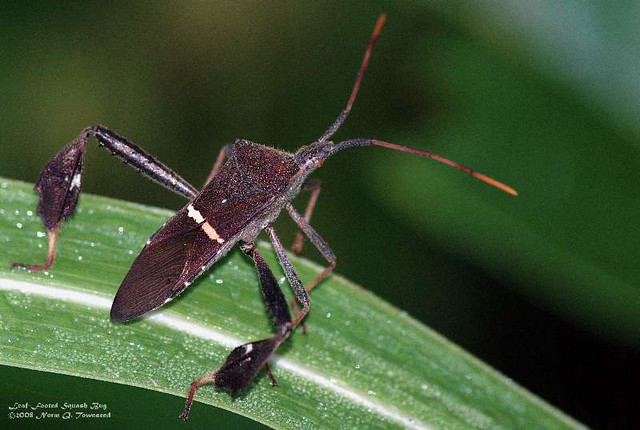
Now that I'm a Clemson Master Gardener (intern), I knew I couldn't just let it go without figuring out what the problem was. It didn't take too long to find the culprit - I've seen these insects a lot in the last couple of years, but with the early spring, they had a chance to attack my potatoes now. I'm talking about the leaf-footed squash bug. It is one of the piercing insects, meaning that it pierces the leaves or shoots to feed, leaving that part of the plant in a compromised state, as you should be able to see from the photo. Unfortunately, they are hard to manage, especially this time of year. They have just emerged from spending winter underground (presumably), and are going to start mating. After they have mated and laid eggs is the best time to control their population - they tend to lay them in clusters on the underside of a squash leaf. After about ten days they will hatch into nymphs and at that time you can use an insecticide on them.

There's not a lot you can do about them when they're adults. I tried hand picking them the other day, but it was pointless. I decided to unleash my secret weapons on them - chickens - and hope there wasn't much collateral damage in the process. I know I fenced the garden off from them, but maybe it would be better if they had free reign of the vegetable patch - yeah, I'm not sure about that. I didn't see any problems when I came home after letting them into the garden, but I couldn't tell if they had eaten any bugs either. I'll let them have at it a few more times and we'll see.
Postscript - apparently, I wrote about this topic before for the master gardener class and posted it
here.

 In the spring, eggs are laid typically on the underside of a leaf of a member of the Curcubit family - squash, cucumber, pumpkin, etc. In about ten days the eggs hatch and the nymphs begin feeding on the host plant and in about 4-6 weeks they will have grown into adults, having completed simple metamorphosis. The adults don't mate, but overwinter until spring when they emerge, mate and begin the whole life cycle again.